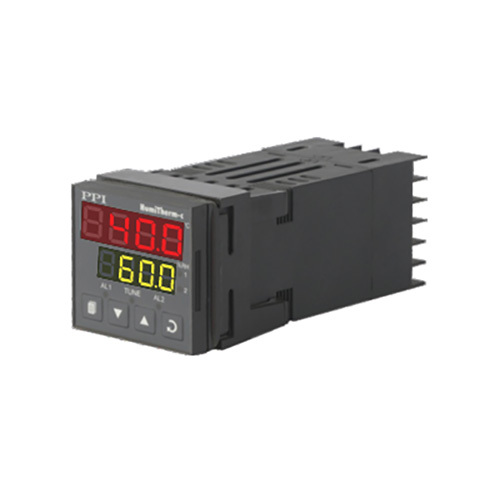
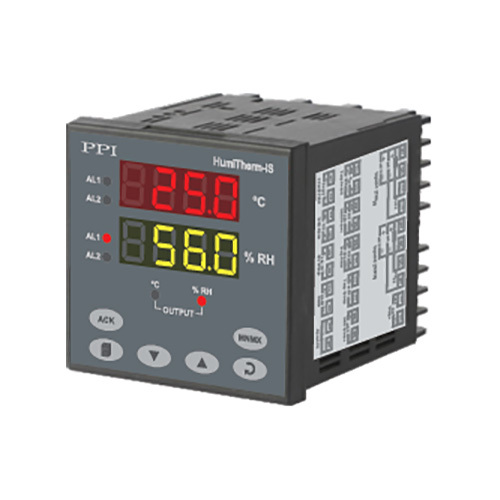
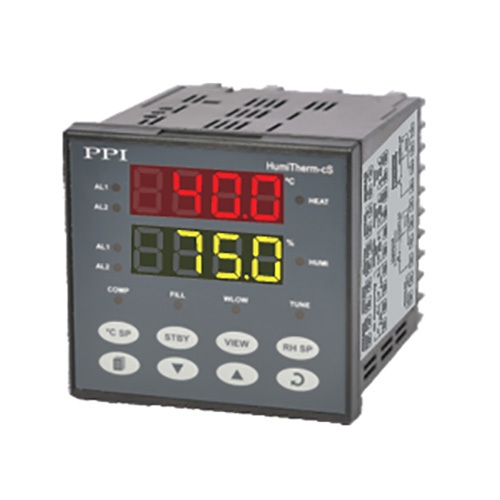
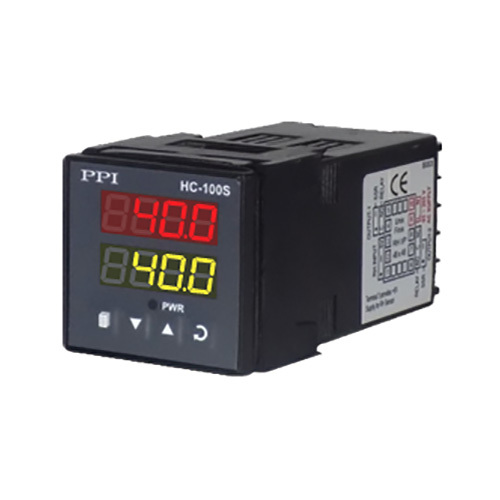
About Composite Temperature Plus RH Self Tune PID Controller
Applications : Stability Chamber, Humidity Chamber
- Independent Displays for Temperature & %RH
- Input Versions: 'Dry / Wet Bulb' or Temperature / RH Transmitters
- Self Tune PID Control for Temperature & Humidity
- Optional Relay Output for Alarm / Compressor Control (with Time Delay)
- Optional RS485, MODBUS Serial Port
Automatic PID Control for Enhanced PrecisionWith advanced self-tuning capabilities, this controller automatically adjusts its PID parameters, ensuring optimal temperature and humidity regulation. This feature significantly reduces manual intervention, optimizing process stability and delivering consistent results across various industrial applications.
Industry-Compliant and Versatile UsageEngineered as per established industry standards, this controller caters to a broad range of temperature requirements. Its flexibility allows integration into diverse industrial settings, guaranteeing reliable temperature and RH control where precision and dependability are paramount.
FAQ's of Composite Temperature Plus RH Self Tune PID Controller:
Q: How does the self-tune PID controller operate automatically?
A: The self-tune PID controller utilizes advanced algorithms to auto-adjust control parameters in real time, allowing for automatic regulation of temperature and relative humidity without manual calibration, thereby maintaining precise process conditions in industrial applications.
Q: What is the voltage requirement for this controller?
A: This controller operates on a standard 220/240 Volt (v) power supply, making it compatible with most industrial electrical systems in India.
Q: When should I use this controller in industrial processes?
A: This controller should be used when consistent and precise temperature and relative humidity control is essential to ensure product quality, safety, or compliance with industry standards in your manufacturing process.
Q: Where can this temperature plus RH controller be installed?
A: The controller is designed for industrial environments and can be integrated into manufacturing, processing, or quality control setups that require reliable temperature and humidity management.
Q: What is the process for setting up and using this controller?
A: Installation involves connecting the unit to the 220/240V power supply, integrating temperature and RH sensors, and configuring setpoints as per the application's requirements. Once set up, the automatic self-tuning feature manages the control loop with minimal user input.
Q: What are the practical benefits of choosing a self-tuning PID controller?
A: Benefits include improved process accuracy, reduced need for manual adjustments, enhanced equipment stability, and minimized downtime. This results in higher product consistency and operational efficiency.

 Send Inquiry



 Send Inquiry

 Send Inquiry