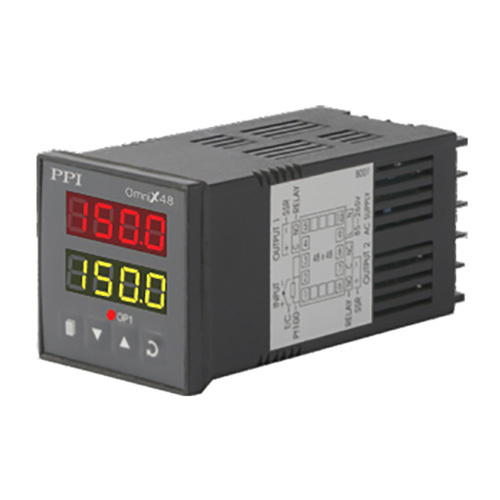
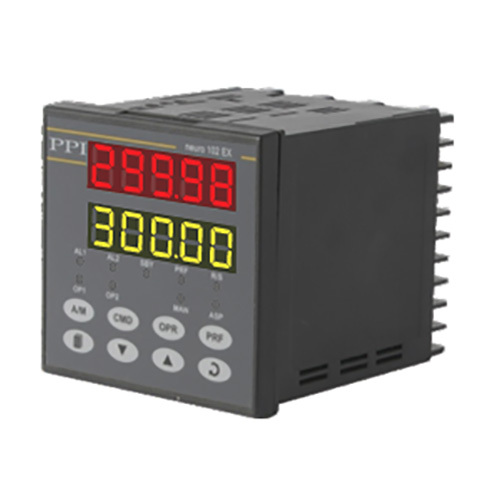
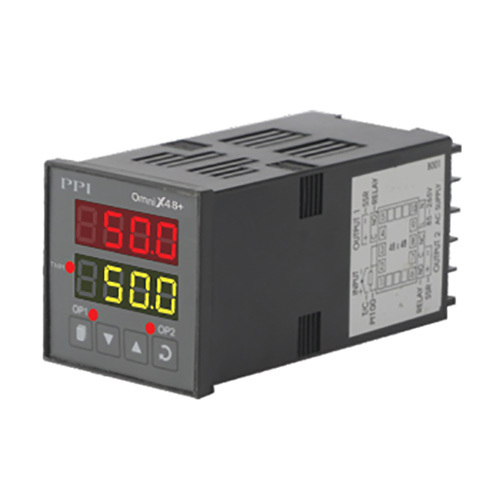
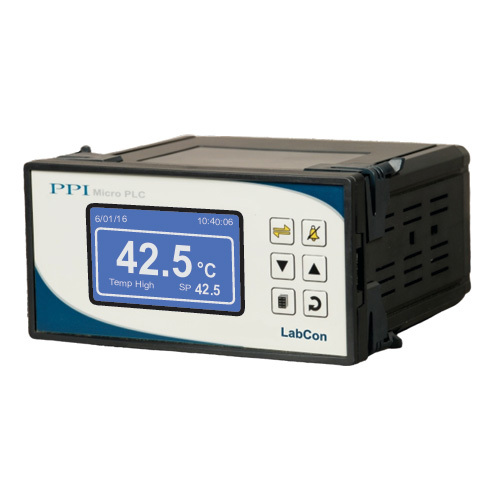
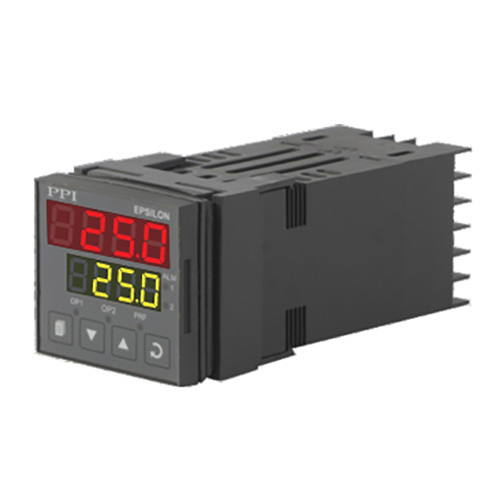
About Single Set Point Temperature Controller
Applications : Lab Ovens, Muffle Furnaces, BOD Incubators, Chillers
- Selectable Input : J / K Thermocouple & RTD Pt100
- Programmable Self Tune PID or On-Off Control
- Jumper- less Selectable Relay & SSR Control Output
- Sizes ( H X W X D, mm) : 48 X48 X 85, 72 X72 X 65, 96 X 96 X 65
Efficient and Reliable PerformanceOur Single Set Point Temperature Controller ensures consistent temperature control, maximizing industrial process efficiency. The automatic mode minimizes manual intervention, reducing the risk of human error and enhancing operational reliability. It operates flawlessly within a voltage range of 220/240V, conforming to industry standards for performance and safety.
Versatile Industrial ApplicationsThis controller seamlessly integrates into a wide variety of industrial settings, providing customizable temperature management as required by your operation. Its wide temperature range makes it suitable for processes demanding precise thermal regulation, ensuring quality and consistency in your output.
FAQ's of Single Set Point Temperature Controller:
Q: How does the Single Set Point Temperature Controller function in an industrial environment?
A: The controller automatically regulates the temperature of equipment or processes by maintaining a set value, using its built-in sensors and electronic circuits to make real-time adjustments and ensure stable operation.
Q: What is the operating voltage range for this temperature controller?
A: This controller is designed to operate efficiently on a standard industrial voltage range of 220/240 volts, ensuring compatibility with most industrial power supplies in India.
Q: When should I use a single set point temperature controller?
A: It is best utilized when your application requires a fixed, precise temperature to be maintained continuously, such as in manufacturing processes or equipment that are sensitive to temperature fluctuations.
Q: Where can this temperature controller be installed?
A: The device is safe for use in any industrial setting, including factories, production lines, and laboratories, provided the installation follows standard industrial protocols.
Q: What is the process for integrating this controller into existing systems?
A: Integration involves connecting the controller to your equipment's power supply and temperature sensors, setting the desired temperature, and enabling automatic operation for hands-free temperature regulation.
Q: How does this product benefit industrial users?
A: By providing automatic and accurate temperature control, the controller enhances process efficiency, minimizes operational errors, and helps maintain consistent product quality, leading to increased productivity and reduced downtime.

 Send Inquiry



 Send Inquiry

 Send Inquiry