About RTDs And Thermocouples
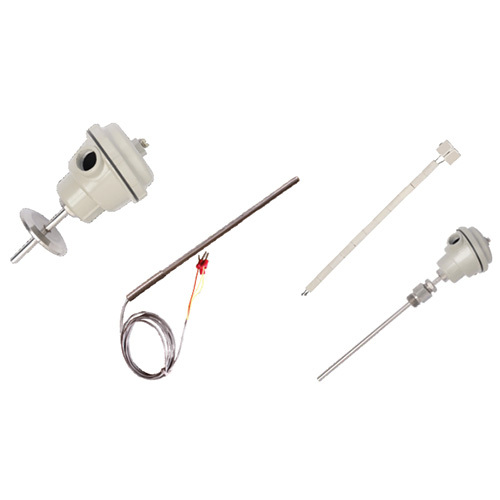
- Transition Joint RTDs & Thermocouples with PTFE/PTFE, PTFE/FG/SS Braiding & FG/FG/SS Braiding Cable
- Wether Proof Head Type RTDs & Thermocouples with Fixed / Adjustable Process Fittings
- RTDs with TRICLOVER
- Bare Thermocouples for Muffle Furnace
Precision Temperature MonitoringOur RTDs and Thermocouples provide accurate temperature monitoring essential for industrial and laboratory environments. Their automatic operation ensures consistent performance with minimal manual intervention, making them ideal for critical processes.
Versatile and Durable ConstructionBuilt using quality metal and plastic, these sensors come in a robust grey and silver finish, ensuring long-lasting service even in harsh conditions. Each model is available in variable weights to meet specific application needs.
FAQ's of RTDs And Thermocouples:
Q: How are RTDs and Thermocouples used in industrial and laboratory environments?
A: RTDs and Thermocouples are installed in equipment to monitor and control temperatures automatically, ensuring accurate results essential for industrial processes and laboratory experiments.
Q: What is the operating voltage requirement for these sensors?
A: These sensors are designed to operate efficiently with a 220 Volt (v) power supply, making them compatible with standard industrial electrical systems in India.
Q: When should I use an RTD compared to a thermocouple?
A: RTDs are preferred for applications requiring high accuracy and stability at lower temperature ranges, while thermocouples are better suited for measuring higher temperatures and withstanding rapid temperature changes.
Q: Where can I purchase these RTDs and Thermocouples in India?
A: These sensors are available through manufacturers, service providers, and suppliers across India, ensuring easy procurement for diverse industrial and lab requirements.
Q: What benefits do automatic operate methods provide for these sensors?
A: Automatic operation simplifies temperature monitoring and control, reduces chances of human error, and enhances overall safety in various industrial and laboratory applications.
Q: How does the construction material impact the sensor's performance?
A: The combination of metal and plastic construction ensures durability, resistance to corrosion, and reliable performance in demanding settings, extending the lifespan of the sensors.

 Send Inquiry


 Send Inquiry

 Send Inquiry